 Skip to content



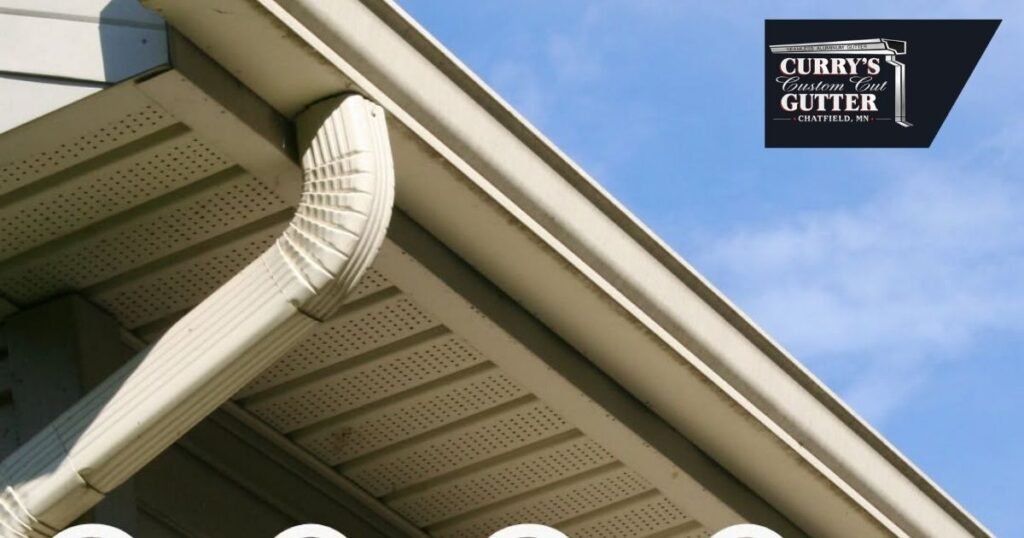
When gutters are overflowing in heavy rain, the problem is rarely as simple as “the gutter is too small.” Water pouring over the front edge can point to clogged outlets, poor gutter pitch, overloaded roof valleys, too few downspouts, or a drainage system that cannot move water away as quickly as a summer storm delivers it.
For Rochester and Southeast Minnesota homes, the location of the overflow often tells the story. Water spilling near a downspout suggests one problem. Overflow in the middle of a long run suggests another. A waterfall beneath a roof valley can indicate concentrated runoff rather than a problem with the entire gutter system.
The right fix starts with finding the bottleneck.
Why Gutters Overflow During Heavy Rain but Look Fine Otherwise
A marginal gutter system can seem perfectly normal during light rain.
Water enters slowly, moves along the trough, reaches the outlet, and drains through the downspout without much stress. A hard summer storm changes the equation. Runoff arrives faster, roof valleys concentrate large volumes into small areas, and every weakness in the system becomes easier to see.
A gutter that is slightly out of pitch may start holding water. A partly blocked outlet may suddenly act like a dam. A downspout that works during ordinary rainfall may not evacuate water quickly enough during a downpour.
Heavy rain does not always create the problem. It often exposes one that was already there.
Gutter Overflow Causes Depend on Where the Water Spills
One of the easiest ways to diagnose a problem is to watch the gutter safely from the ground during rain.
If water pours over one specific point, there is usually a local cause. If an entire run fills and spills, the issue is more likely related to drainage capacity, pitch, or downspout placement.
This distinction matters because replacing every gutter on the house may be unnecessary.
A targeted repair can sometimes solve the problem if the gutter itself is still in good condition.
Water Pouring Over Gutters Near the Downspout
Overflow close to a downspout often points to a restriction.
Leaves, roof grit, seed pods, small twigs, or compacted debris can collect around the outlet where the gutter transitions into the downspout. The gutter above it may look relatively clean while the actual opening is partially blocked.
The result is easy to recognize during a storm. Water reaches the low end of the gutter, cannot leave fast enough, backs up, and eventually pours over the edge.
The downspout itself may also be clogged lower in the run.
In this situation, installing a larger gutter will not solve the main problem. The restriction needs to be cleared, and the outlet should be checked for proper flow.
Overflow in the Middle of the Gutter Can Mean a Pitch Problem
Gutters need a controlled slope toward their outlets.
If part of the system has sagged, shifted, or was installed without enough pitch, water may collect in a low section instead of moving toward the downspout.
A gutter pitch problem becomes especially obvious during heavy rain because water fills the low point faster than it can escape.
Standing water after the storm is another clue.
Once the rain stops, look from the ground for sections that continue holding water long after neighboring runs have drained. Sagging, loose hangers, fascia movement, or incorrect installation can all contribute.
The repair may involve resetting hangers, correcting slope, or replacing a distorted section.
Roof Valleys Can Overwhelm One Small Section
Roof valleys create some of the most dramatic gutter overflow.
A valley collects water from two roof planes and funnels it toward a narrow point at the eave. During heavy rainfall, that concentrated stream can hit the gutter with far more force than runoff arriving evenly along a straight roof edge.
Water may splash over the front, shoot beyond the gutter, or overwhelm the outlet nearest the valley.
This is why the total size of the house does not always predict gutter performance.
A relatively modest roof can create a severe overflow point if multiple surfaces direct water toward the same location.
The fix may involve larger gutter capacity, improved downspout placement, a splash guard in the right situation, or redesigning how that roof section is drained.
An Undersized Downspout Can Create Overflow Even With Large Gutters
A gutter can only hold water temporarily.
The downspout determines how quickly that water leaves.
An undersized downspout overflow problem occurs when the gutter receives water faster than the outlet and vertical pipe can discharge it. The trough fills from the low end backward until water starts spilling.
This is especially common on long runs or roof sections with substantial drainage area.
Simply installing a wider gutter can delay the overflow without eliminating it. A larger gutter gives water more temporary storage, but if the downspout remains the bottleneck, the system may still fail during the same type of storm.
Increasing outlet size, upgrading downspout dimensions, or adding another downspout may produce a more effective improvement.
Too Few Downspouts Can Overload a Long Gutter Run
Long gutter runs are vulnerable when all the water is forced toward a single exit.
Imagine a long roof edge draining toward one downspout at the far end. During steady rain, the arrangement may work. During a severe thunderstorm, water entering near the opposite end must travel the entire run while additional runoff keeps entering along the way.
The volume becomes greater as water approaches the outlet.
Adding another downspout can split the drainage load and shorten the distance water has to travel.
This can be more effective than replacing an otherwise suitable gutter with a larger size.
Debris Reduces Effective Gutter Capacity
A gutter does not need to be completely clogged to overflow.
A layer of wet leaves, shingle grit, pine needles, or organic debris takes up space inside the trough and slows the movement of water. Heavy rain then enters a gutter that has only part of its original capacity available.
Debris can also gather around hangers, corners, miters, and outlets where flow naturally encounters resistance.
This is why gutter cleaning is not only about preventing visible blockages.
Keeping the water path open preserves the usable capacity of the entire system.
Small Outlets Can Restrict a Bigger Gutter
The opening connecting the gutter to the downspout is another potential choke point.
A gutter may have enough volume and the downspout below may appear large enough, but if the outlet opening is too small or partially obstructed, water still cannot leave efficiently.
Stormwater systems work according to their narrowest restriction.
A larger trough connected to a limited outlet can behave much like a large sink with a small drain.
The inspection should therefore include the transition between the gutter and downspout, not just the visible parts of each component.
When Are Gutters Actually Too Small?
Sometimes the gutter itself is the limiting factor.
Standard 5-inch K-style gutters work very well on many homes, but they are not ideal for every roofline. Large drainage areas, steep roof pitches, long runs, and high-volume valleys can create more runoff than a standard gutter comfortably handles during intense storms.
In those situations, 6-inch gutters may provide useful additional capacity.
The important distinction is proving that capacity is the problem first.
If the current gutter is full from end to end even though it is clean, properly pitched, and connected to adequate downspouts, upsizing becomes a much more reasonable solution.
If only one corner is overflowing because the outlet is plugged, replacing the entire system with oversized gutters would miss the actual cause.
Overflow Behind the Gutter Is a Different Problem
Not all gutter overflow happens over the front edge.
Water appearing behind the gutter, against the fascia, or beneath the roof edge may indicate a different issue. The gutter could be pulling away from the fascia, the roof edge may not be directing runoff into the trough properly, or flashing-related details may need attention.
This kind of water movement can be especially damaging because it may remain less visible than a dramatic waterfall over the front.
Water repeatedly wetting fascia boards can contribute to deterioration and eventually weaken the surface holding the gutters in place.
A proper inspection should determine where the water begins before any repair is recommended.
Overflowing Gutters Can Put the Foundation at Risk
An overflowing gutter foundation problem develops when roof water repeatedly lands beside the house instead of being carried to a controlled discharge point.
During a strong storm, hundreds of gallons of water can move across a roof.
When gutters spill near the foundation, that water can saturate soil beside basement walls, erode landscaping, create washouts, splash against siding, and collect in low areas near the structure.
Foundation problems are not caused by one gutter spill alone, but repeated uncontrolled drainage is something homeowners should take seriously.
The goal of a gutter system is not merely to keep roof edges dry.
It is to move water from the roof to a safer place on the property.
Downspout Discharge Still Matters After the Overflow Is Fixed
Correcting gutter overflow solves only part of the drainage problem if the downspouts release water immediately beside the foundation.
Water should leave the system at a location where it can continue moving away from the structure.
Extensions, properly directed discharge, and sensible grading around the house all affect what happens after water exits the downspout.
A gutter system that collects every drop perfectly but dumps all of it against a basement wall is still incomplete as a water-management system.
How to Tell Which Gutter Fix You Actually Need
The best time to understand an overflow problem is during or immediately after heavy rain.
Notice where the water is escaping, whether the gutter appears full, whether one outlet is backing up, whether a roof valley is feeding the problem area, and whether water remains standing after the storm ends.
Curry’s Custom Cut Gutter can then evaluate the physical system rather than guessing from the symptom alone.
A correct repair might involve cleaning an outlet, correcting gutter pitch, adding a downspout, increasing downspout size, improving a valley transition, resetting a loose section, or replacing an undersized gutter run.
Different causes require different fixes.
Should You Replace the Gutters or Repair the Drainage Problem?
Replacement makes sense when the existing gutters are damaged, undersized for the roof, pulling away from deteriorated fascia, repeatedly leaking at failed joints, or no longer capable of being properly pitched.
Repair makes more sense when the main system remains sound and the overflow comes from a correctable bot,tleneck.
This is why an overflow complaint should not automatically become a full replacement quote.
The useful question is not, “How big of a gutter can we install?”
It is, “Why is this water leaving the system?”
Stop the Overflow Before the Next Heavy Storm
Overflowing gutters are easiest to ignore after the sky clears.
The evidence disappears, the driveway dries, and the gutter looks normal again.
The underlying drainage problem is still there.
Curry’s Custom Cut Gutter can inspect gutter pitch, outlets, downspouts, roof valleys, attachment points, drainage capacity, and discharge locations to identify what is causing the overflow. If the existing system can be corrected, the repair should address the actual restriction. If the roof demands greater capacity, properly sized seamless gutters and downspouts can be planned around that load.
When water is pouring over gutters, the goal is not simply to catch more water.
The goal is to keep it moving.
Frequently Asked Questions
Why do my gutters overflow only during heavy rain?
Heavy storms expose drainage limits that may not appear during lighter rainfall. A partly clogged outlet, poor gutter pitch, small downspout, long run, roof valley, or undersized gutter may handle normal rain but become overwhelmed when runoff reaches the system much faster.
Can clogged downspouts make gutters overflow?
Yes. A clogged or partially blocked downspout prevents water from leaving the gutter efficiently. Water then backs up near the outlet and can eventually spill over the front or rear edge. The blockage may be at the top opening or farther down the vertical pipe.
How do I know if my gutters have the wrong pitch?
Standing water after rainfall is one common warning sign. Water collecting in the middle of a run, overflow away from the downspout, visible sagging, or a section that drains unusually slowly can also indicate a pitch problem. The gutter may need to be reset rather than replaced.
Will 6-inch gutters stop heavy-rain overflow?
They can help when insufficient gutter capacity is the real cause, especially on steep roofs, large drainage areas, or high-volume valleys. They will not fix a clogged outlet, badly pitched gutter, insufficient downspout capacity, or another restriction elsewhere in the drainage system.
Can overflowing gutters damage a foundation?
Repeated overflow can concentrate roof water beside the foundation, increasing soil saturation, erosion, splashback, and water pressure around basement walls. Good gutters and properly directed downspouts help move that water farther from the structure.
Should I add another downspout if my gutter keeps overflowing?
Possibly. An additional downspout can reduce the amount of water each outlet must handle and shorten the distance runoff travels through a long gutter run. The roof area, gutter size, current downspout dimensions, overflow location, and discharge options should be evaluated before making the change.